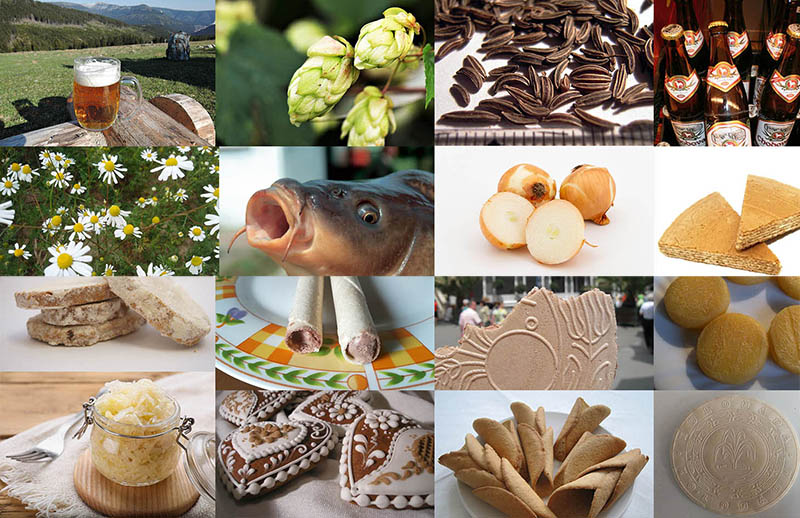
This is a list of Czech products that benefit from special protection within the European Union. These protected Czech foods, drinks and herbs bear one of the EU-denominations.
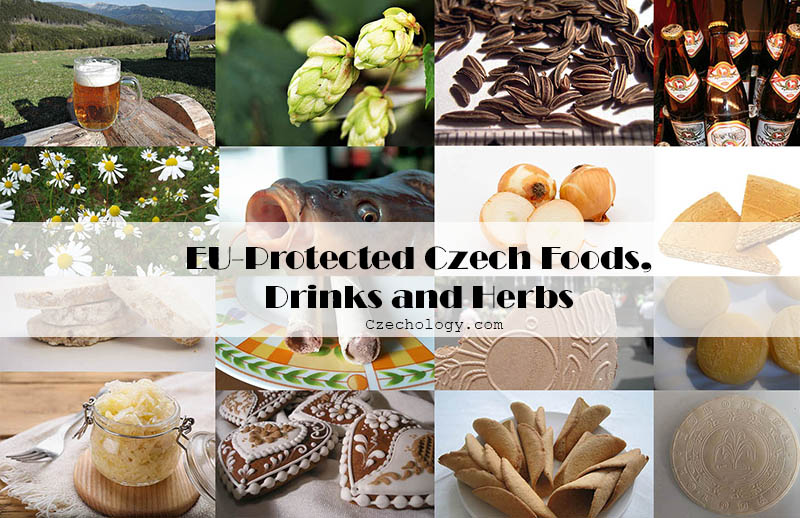
Since 1992, the EU and its predecessor have been awarding one of three designations of protection to specialties whose reputation extends beyond the area of their origin. The aim is to protect not only the origin but also the recipe and production process. These three designations are: Protected Designation of Origin (PDO), Protected Geographical Indication (PGI) and Traditional Speciality Guaranteed (TSG).
Table of Contents
Protected Czech Foods, Drinks and Herbs
Foods
Olomoucké tvarůžky, PDO
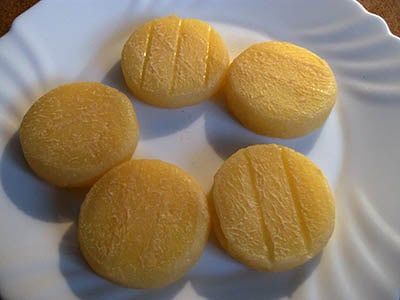
This smelly cheese has a long tradition in the region of Haná, the first written mention comes from the 15th century. It got its name from the city Olomouc where it used to be sold at the local market. The village of Loštice is considered the official home of the smelly delicacy and it’s also home to the Museum of Tvarůžky and Tvarůžky candy store.
Karlovarské oplatky/Wafers from Carlsbad, PGI
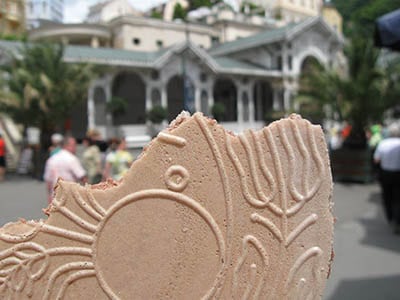
Round Carlsbad wafers have been in production since 1788. The wafers from are round with sugar and sometimes nuts.
Mariánskolázeňské oplatky/Wafers from Mariánské lázně, PDO
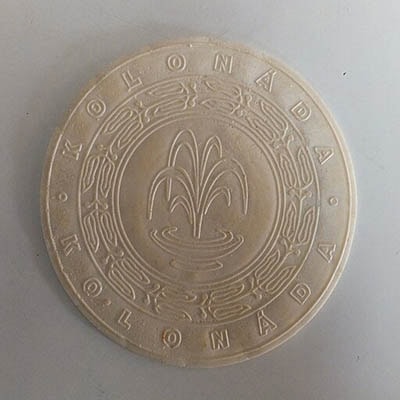
Just like the Carlsbad wafers, the Wafers from Mariánské lázně (another spa town) are round wafers with sugar and nuts.
Karlovarské trojhránky/Carlsbad triangles, PDO
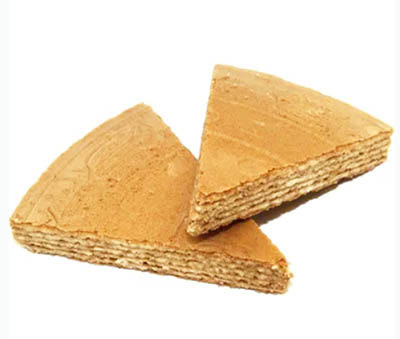
Carlsbad triangles are made from several round wafers connected with different fillings and cut into eight equal triangles.
Hořické trubičky, PGI
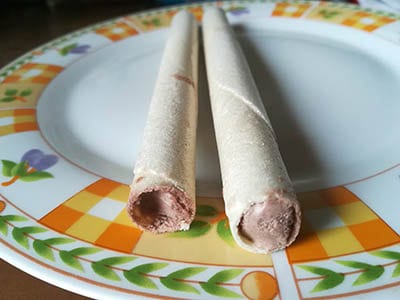
Sweet crunchy rolled wafers either with willing or sprinkled with sugar and nuts. Made since 1812 in the town of Hořice and nearby villages in the region of Krkonoše mountains.
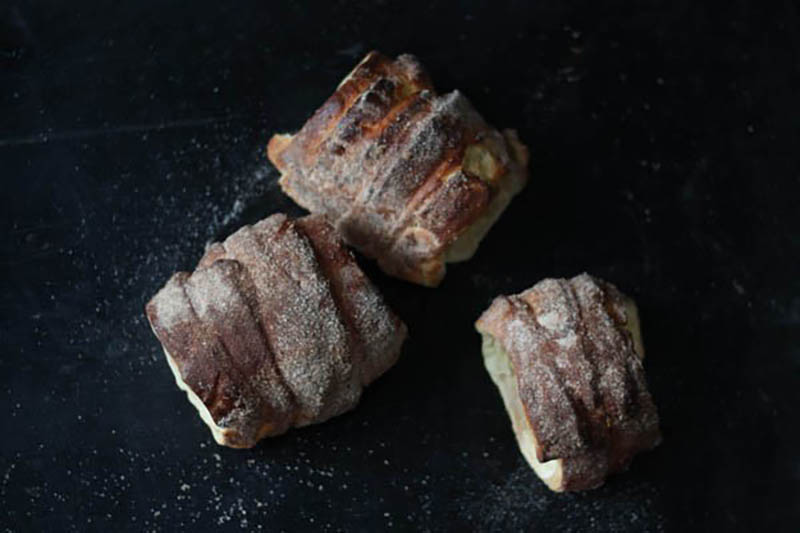
Lomnické suchary/Lomnice crackers, PGI
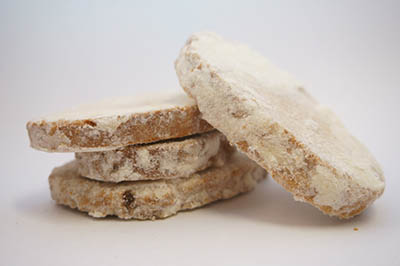
Lomnické suchary are a type of sweet crackers coated in powder sugar. Households in Lomnice nad Popelkou were making them before they started being produced on a large scale in 1810.
Pardubický perník/Pardubice gingerbread, PGI
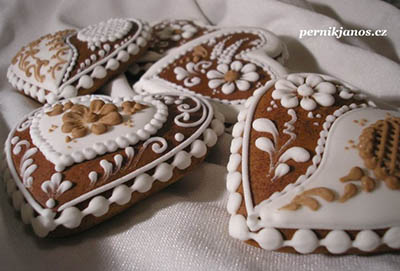
This is actually two types of gingerbread from the town Pardubice. The first one is the hard cookie in traditional shapes (heart, horseshoe…) decorated with sugar icing. The second is two layers of soft cake with a layer of jam between them.
Všestarská cibule/Onion from Všestary, PGI, PDO
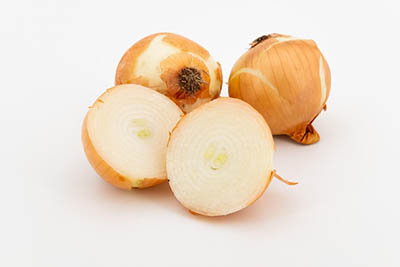
The village Všestary has ideal conditions for growing onions. Thanks to these conditions, the onion has a high content of iron and vitamin B3 and a sweet taste.
Karlovarský suchar/Carlsbad rusks, PGI
Two crucial ingredients of the rusks from Carlsbad is the hot spring healing water and salt. It comes in the shape of a bread loaf and the production of this rusk takes 3 days.
Štramberské uši/Štramberk ears, PGI
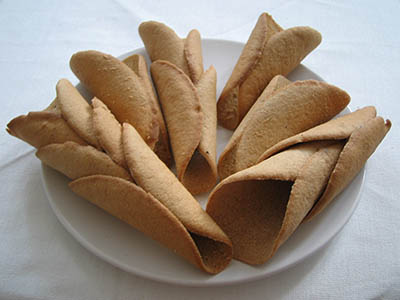
Štramberské uši (“ears from Štramberk”) are famous sweet rolled crackers. When in 1241, Štramberk was being looted with Mongols, a large storm came and destroyed the looters’ camp. The locals found sacks of ears the Mongols cut off the Christians they captured. Since then, the locals have been baking these crackers as a symbol of gratitude for being saved.
Třeboňský kapr/Carp from Třeboňsko, PGI
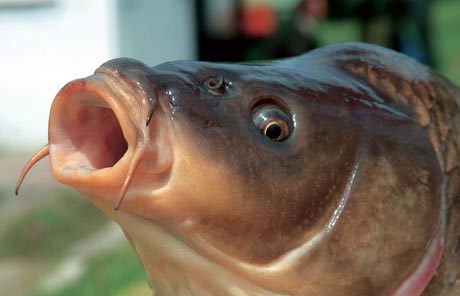
High-quality mean, minimum fat, typical taste, those are the characteristics of from carp from the region of Třeboňsko. South Bohemia is known for its system of artificial ponds where these fish are bred since the 16th century.
Pohořelický kapr/Carp from Pohořelice, PDO
Also the carp from Pohořelice enjoys a special kind of protection. Only this one comes from the region of South Moravia, with a tradition going back to the 12th century.
Nošovické kysané zelí/Nošovice sauerkraut, PDO
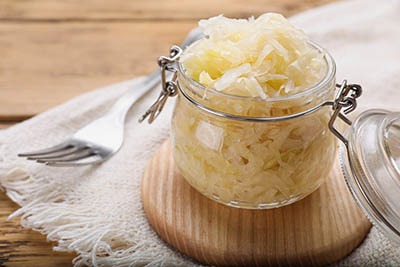
Fermented cabbage of Nošovice is valued for its specific properties thanks to the traditional way of preparation. The cabbage is grated, spices are added and the cabbage is treaded for a day. Then it ferments for 6 weeks. The result is very high in vitamin C.
Drinks
Chodské pivo/Beer from Chodsko, PGI
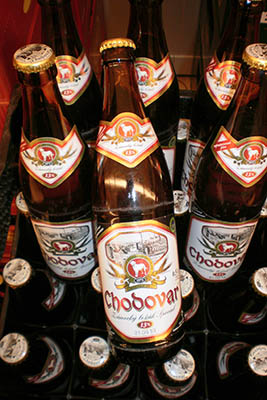
Chodské pivo literally means “beer from Chodsko” which is the area of the borders with Bavaria. This protection was awarded to the family brewery Chodovar in Chodová Planá. The beer from this area is unique in taste because of the local water which is low in minerals and comes from a granite rocks. The malt is prepared from local hordeum and the mixture cures in 800-old cellars.
Piva z Českých Budějovic/Beers from Budweis, PGI
The tradition of beer brewing in České Budějovice goes back to the 13th century. The right to use the PGI was awarded to Budějovický Budvar (Budweiser Budwar) and Budějovický měšťanský pivovar.
České pivo/Czech beer, PGI
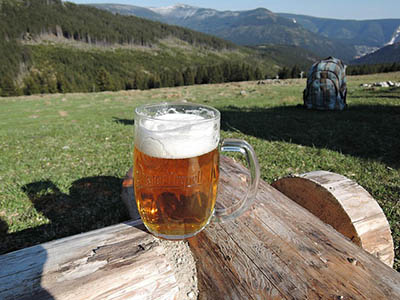
The denomination České pivo (Czech beer) can be awarded under 3 conditions: the beer is made in the Czech Republic, it’s made from traditional ingredients and using traditional technologies (among others, infusion isn’t allowed and 2-phase fermentation is necessary)
Herbs
Chamomilla Bohemica, PDO
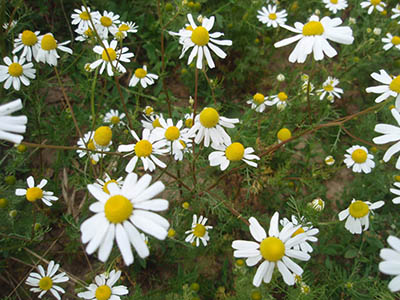
The chamomile from Bohemia has a higher content of oils which makes it also more potent in its medical effects.
Český kmín/Czech caraway, PDO
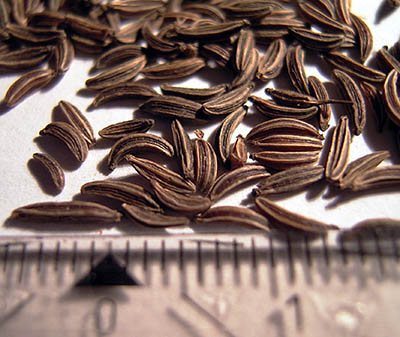
Czech caraway is very valued internationally for its high content of essential oil
Žatecký chmel/Hop from Žatec, PDO
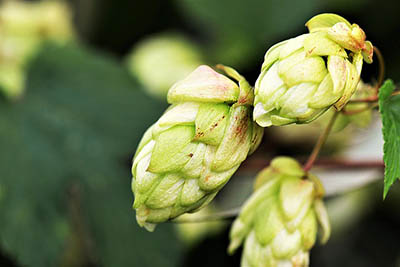
The fragrant hop from Žatec enjoy the protection thanks to its unique balance of essential oils which gives the beer made from it a specific fragrance. Hop has been cultivated in the region for over thousand years.
Products that seek protection
Jihočeská niva, which is a blue cheese from the south-bohemian region, is still seeking the EU protection of origin. The reason for which the cheese hasn’t been awarded any of the aforementioned marks of protection is the objections raised by Slovakia (the claim says that this type of cheese was made also in Slovakia during the existence of Czechoslovakia).
Photos:
Olomoucké tvarůžky: Autor: Chmee2 – Vlastní dílo, CC BY-SA 3.0, https://commons.wikimedia.org/w/index.php?curid=3598270
Karlovarské oplatky: Di Juan de Vojníkov – Opera propria, CC BY-SA 3.0, https://commons.wikimedia.org/w/index.php?curid=7807796
Mariánskolázeňské oplatky: Syrio, CC BY-SA 4.0 <https://creativecommons.org/licenses/by-sa/4.0>, via Wikimedia Commons
Hořické trubičky: Autorstwa MOs810 – Praca własna, CC BY-SA 4.0, https://commons.wikimedia.org/w/index.php?curid=80490892
Lomnické suchary: Autor: Adam Rejha – Vlastní dílo, CC BY-SA 4.0, https://commons.wikimedia.org/w/index.php?curid=62695889
Pardubický perník: http://www.pardubickypernik.com/
Štramberské uši: Autor: Manka, CC BY-SA 3.0, https://commons.wikimedia.org/w/index.php?curid=3791191
Třeboňský kapr: https://www.trebon.rybarstvi.cz/
Nošovické kysané zelí: https://www.zdvnosovice.cz/
Chodské pivo: Autor: Viktor Fiala (Plzeň) – Vlastní dílo, CC BY 3.0, https://commons.wikimedia.org/w/index.php?curid=9553311
Chamomilla Bohemica: Autor: FloraTrek 2008 – http://floratrek.hautetfort.com/archive/2008/07/31/camomille-le-soleil-d-egypte.html, CC BY-SA 3.0, https://commons.wikimedia.org/w/index.php?curid=5549389
Český kmín: Autor: Oliver s. – Vlastní dílo, CC BY-SA 3.0, https://commons.wikimedia.org/w/index.php?curid=658891