Did you enjoy Czech habits that might surprise you? Well, brace yourselves because the cultural shock might become even bigger with this second edition!
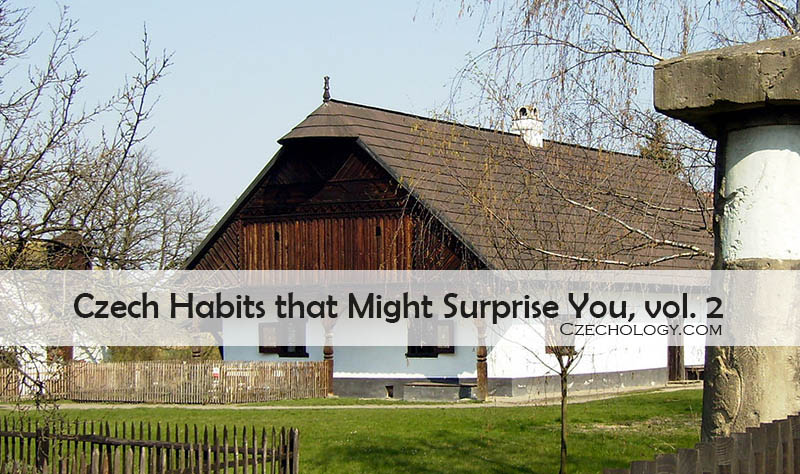
In the first article about the Czech habits that could cause a cultural shock to people from very different cultures, we’ve talked about the custom of taking of shoes when entering a house, helping with baby prams and strollers, leaving your seat to the elderly and going for a visit.
This is a second edition of the list and yes, it uses generalization 😉
Table of Contents
Czech habits that might surprise you vol. 2
Going to the cottage
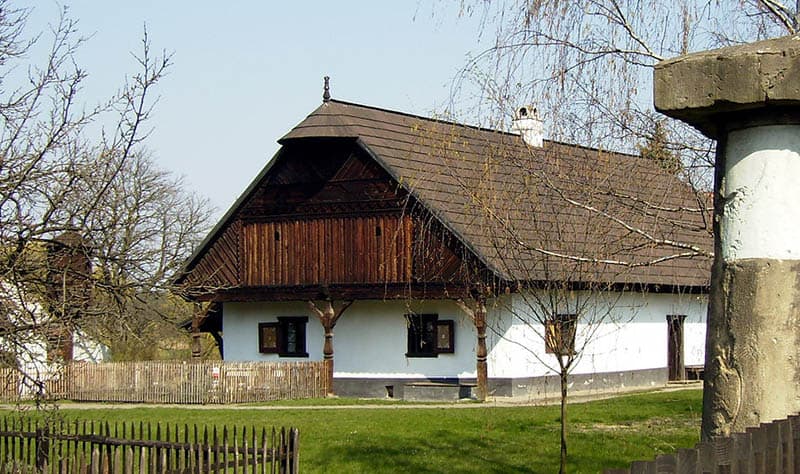
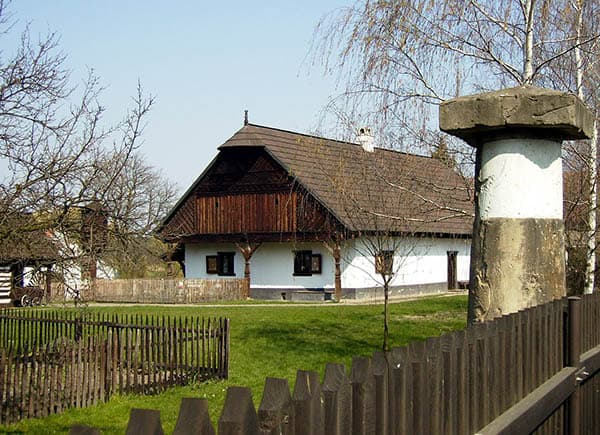
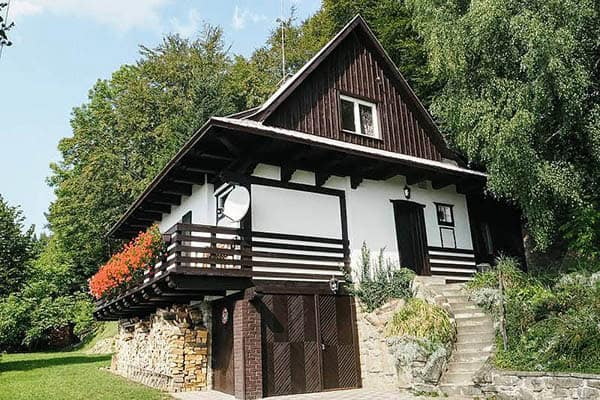
Many Czech families still have a house in the countryside that their ancestors used to live in. And if not a house that’s the family heirloom, one that they acquired from somebody else. These houses come in two types – more or less traditional family house inside the town or villgae that could have conserved its original look or been modernized, this one is called chalupa. The second type is a simpler house that tends to be smaller, often (but not exclusively) made from wood and/or stone and located outside of the villages in the so-called garden colonies, forests or generally outside of town. There houses sometimes don’t have running water and they’re called chata.
Families use these to spend their weekends and holidays in the countryside and for many of them, it’s a place full of memories as there are often families that have been coming here for generation.
Going to have ONE beer
Beer is hugely popular in the Czech Republic. This drink has a rich history in the country and Czech Republic is home to some of the best beer brands. There’s a phrase that says “Jdu na jedno” – “I’m going to have one”. This literally means going to the pub to have a beer and the phrase used to be subjected to mockery as the people hardly ever had just one beer. However, with the rising prices of (not just) beer, it might become truthful soon.
Chilling honesty
If you come from a place where people tend to be always smiling and tend to “keep the drama for their mama”, you might be really culturally shocked by this one. Czech people answer the question “How are you?” honestly. It’s not merely a part of the greeting, it’s a question that is often answered honestly. And that means that if one’s not doing so well, one’s answer might really be “Badly”. Some say that “Badly” is the prevalent answer as Czechs always find something to complain about but in mu experience, a much more common answer begins with “Jde to” or “Ujde to” which could be translated as “It’s quite ok”, or “Not so bad” if you want to emphasize the traditional view of glass half empty.
Whilst some see this honesty as grumpiness or even rudeness, others find it refreshing. Frankly, Czechs want to hear about how you are. You might choose to say “fine” and go on but you can also choose to say how you really are (by the way, the answer “Great!” is always acceptable, too :-P) and elaborate and in most cases, it will be met with interest.
Mushroom hunting
Mushroom hunting is definitely one of the national hobbies. Come autumn the forest are full of people with baskets looking for dozens of types of delicious mushrooms. I say autumn but actually, mushrooms grow all year long and many Czechs know which mushrooms to look for in each season of the year. It’s not uncommon that even children know the basic types of mushrooms. Read more in You know you’re Czech if…
Mushrooms are then cleaned and canned or used in meals. Some mushrooms are preserved in dried state and used for typical winter meals such as Bramboračka soup.
Featured picture: Petr Vilgus, CC BY-SA 3.0 <http://creativecommons.org/licenses/by-sa/3.0/>, via Wikimedia Commons